
There’s a quiet assumption built into modern travel: that a “good” holiday has to be an expensive one. However, as a Slow Down and Saver, I’m here to challenge that. While spending money on holiday can certainly lead to enjoyment – think nice restaurant meals, a chartered flight or boat trip for sightseeing, hiring a luxury car or spa day – it’s not a necessity to have a good time.
While there’s nothing wrong with spending money on experiences you enjoy (and you should, by the way), there are many ways to have a good time without breaking the bank. In fact, some of the best cheap things to do on holiday are also the most memorable.
To work out where you put the line on excessive spending, ask the question “Are we actually getting more enjoyment out of this… or just spending more by default?“.
Often, the most memorable moments in life – whether on holiday or not – tend to be inexpensive, simple things. A bike ride with your kids, eating ice cream on the beach, watching the sunset, watching a good movie as a family (while eating popcorn and home-made cake).
This post isn’t about avoiding spending entirely while on holiday – that’s a recipe for misery. Rather, it’s about shifting your mindset away from the need to spend money to have fun. Once you do this, you start to realise just how much there is to do that costs very little (or nothing) – and the surprising thing is that this often feels more meaningful than spending money to get a similar great experience.
Here are some cheap and meaningful things to do on holiday or at the weekend:
- Go for an aimless walk.
- Watch the sunrise and sunset.
- Use nature as your entertainment.
- Have a picnic in a beautiful place.
- Visit free museums and galleries.
- Explore local markets.
- Read more books.
- Bake from scratch.
- Grow something at home.
- Try cloudspotting.
1. Go for an aimless walk
Admittedly, this may sound ridiculous. Can you remember the last time you did this? Let your inner 6-year-old come out and explore the world around you. Go out with an open and inquisitive mind, and everything you see will be new and exciting! It’s arguably the most underrated activity there is.
You see, when we travel, we tend to move with purpose: hotel to attraction, restaurant to viewpoint. Everything becomes scheduled. But wandering without a plan is where you’ll find the hidden gems: a quiet street, hidden café, unexpected viewpoint.
Walking without a destination costs nothing, but shifts your mindset from consuming a place to experiencing it. This is exactly the kind of intentional mindset we love at Slow Down and Save.
2. Watch every sunrise and sunset
I find that watching a sunrise is one of the most special things you can do in life. The moment of sunrise is glorious – one instant you’re standing in the serene glow of the pre-dawn with a cool wind on your face, and in the next, the first glint of the Sun’s disc emerges above the horizon to signal the start of a new day. It’s a very special moment!
These moments are completely free – and yet we often ignore them. On holiday especially, there is a tendency to stay up late and wake up late. Why not get up early and go to bed early? It takes more discipline to do this, but I’d argue that you’ll enjoy your time more when you have the world to yourself in the quiet mornings.
There’s a beautiful simplicity about a quiet morning walk at sunrise, and then sitting somewhere scenic at the end of the day as the light fades. These are the moments that create a sense of calm – something that you’re probably seeking when you booked the holiday in the first place.
3. Nature is your entertainment
Hiking, swimming, cycling, running, exploring – these are some of the richest, most exhilarating experiences available – and they’re often either free or very low cost. I’m a big advocate of taking regular exercise while on holiday. Your body still needs exercise, whether you’re on holiday or not, and you can use that free time to exercise in nature.
Spending time in nature has been shown to improve mental and physical health, reduce stress and enhance cognitive function.
A day spent hiking doesn’t need much: comfortable shoes, water and food. Compare that to a full day of paid attractions – it’s far cheaper, but also better for your health and more restorative for the soul.
4. Visit a beautiful place and have a picnic
This has to be one of my favourites. Eating out constantly while on holiday soon gets tiresome. You start longing for fresh, home-cooked food. Granted, not every accommodation has the facilities, but if you have a food preparation area, you can pick up fresh, local ingredients and make a packed lunch. It doesn’t have to be complicated.
Take it to a park, beach, scenic viewpoint, or just someplace quiet. Not only is it cheaper, it feels more relaxing than sitting in a busy restaurant or café. Simple, healthy food to nourish the body and calm the soul. You control the pace, you choose the setting.
5. Free museums and galleries
Many towns and cities in the UK and Europe have excellent free museums and galleries which you should take advantage of. It may take a little planning in advance, but these can be a great way to spend a few hours on a rainy day.
In some cities (like London), there are multiple free places to visit. Don’t try and do them all – pick one or two that genuinely interest you and take your time. I personally find that rushing through multiple attractions in one day never adds more value than slowly exploring one.
6. Local markets over tourist shops
It’s easy to fall into the trap of buying cheap tourist souvenirs that just clutter up your house. Of course, not all souvenirs are junk – sometimes you’ll find a shop selling genuine items – but you certainly want to avoid the tourist trap shops. Local markets may be a remedy to both of these things though.
Local markets tend to sell genuine products that are better value. Even if you don’t buy anything, they offer a glimpse into daily life, what the local produce and culture are like, and a slower, more authentic experience.
7. Read books
Only 50% of UK adults regularly read for pleasure, a number which has been in rapid decline over the past 20 years. You should get back into reading. Not only are you likely to be more satisfied with your life, regularly reading has also been proven to reduce stress and improve mental health.
Keep a list of all the books you’ve read, and keep adding to it as often as you can. Reading is a cheap hobby, but you can use your local library or buy books from charity shops to save even more money.
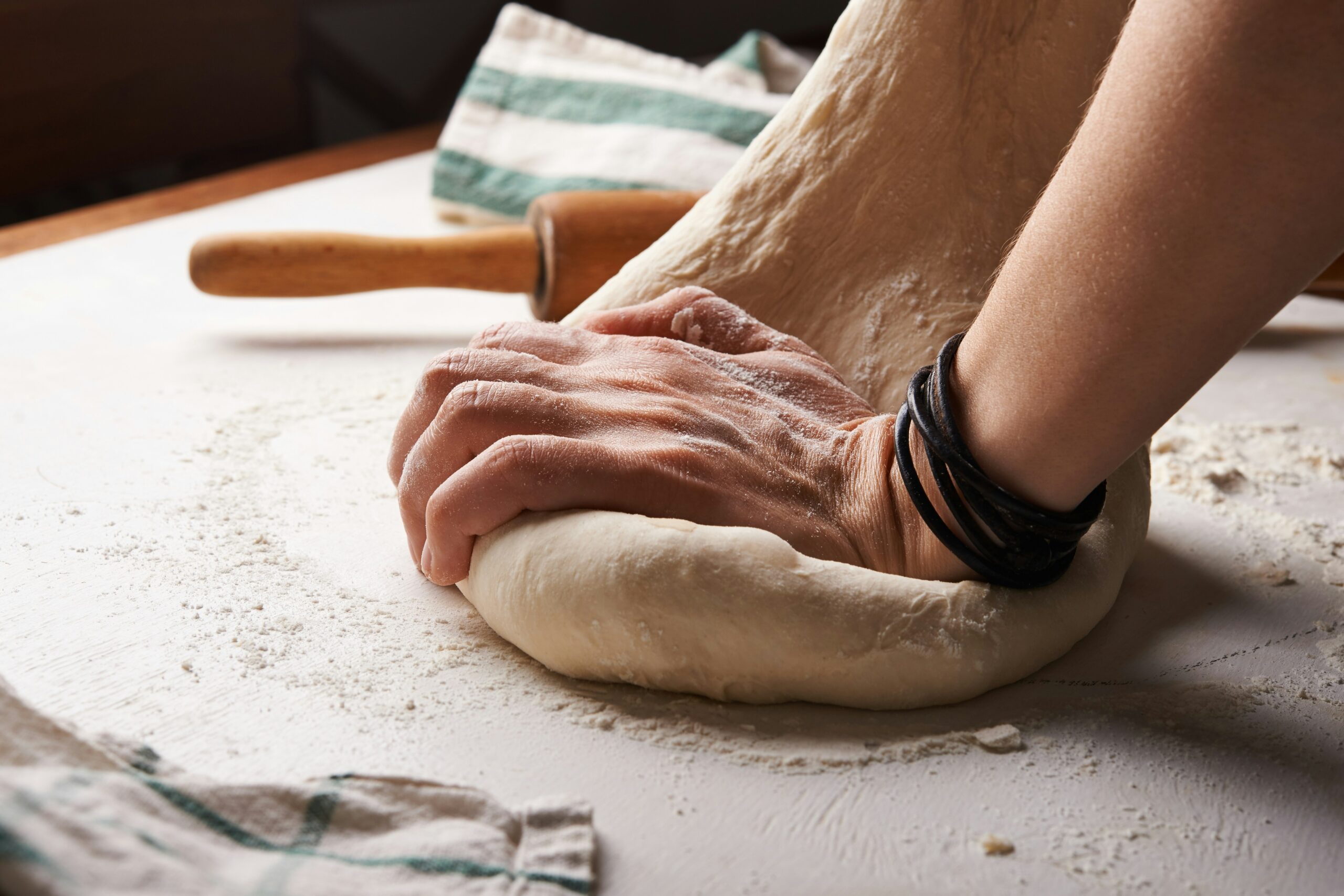
8. Get baking
Like many of the ideas in this post, baking forces you to slow down. You can’t rush it too much. The enjoyment is in the process and the result. While the ingredients do cost something, it’s far less than buying the equivalent from a café or bakery, and the results are just as nice and certainly a lot better than shop-bought alternatives.
I love baking – I find it therapeutic, plus I tend to put on a podcast. So I feel doubly productive during that time. And at the end, there’s something tangible – and tasty – to show for it.
Baking challenges the habit of outsourcing everything – not everything needs to be bought ready-made. Baking it yourself is cheaper, tastier and more satisfying.
9. Sort out the garden
Rather than looking for ways to spend money at the weekend, how about giving attention to things at home. The garden is often something which is maintained as a chore – cutting the grass or weeding for example. But it doesn’t have to be this way. You can turn your garden into a space you genuinely want to spend time in – not just something you look at through a window.
This might mean spending money on garden furniture and landscaping, but a lot of the landscaping can be insourced by you, and furniture can be found for the cheap on used websites.
Or, you could…
Grow something
Even if it’s just a small vegetable patch, there’s something calming about growing your own food. It might be something as simple as herbs on a windowsill or tomatoes on a balcony.
From a personal finance perspective, you’re unlikely to save much money doing this (and it can be a large time investment, if you want it to be). But that’s not really the point. The process is the reward.
On a weekend, or even just a quiet evening after work, spending time in the garden can feel surprisingly restorative.

10. Look up: the lost art of cloudspotting
This might be the simplest and most overlooked activity of all. Cloudspotting requires no equipment and no cost. You’ll know instinctively when the weather is right – a bright, breezy day with blue sky and patchy cumulus clouds rolling past.
At first, it feels like you’re doing nothing (which in a way, you are). But after a few moments, your attention shifts. Your mind slows down and you stop thinking about the constant input from the outside world. You start to notice patterns in the clouds. Movement, turbulence, waves, shapes forming and dissolving.
In a world that is so busy, and saturated with stimulation, this kind of stillness can feel unfamiliar, but it’s valuable because it gives your attention a break and it immerses you in the beauty that is this giant spaceship called Earth.
Final thoughts
It’s easy to assume that meaningful experiences come with a high price tag. But as we’ve explored, this isn’t necessarily the case. It’s all about perspective.
Some of the most enjoyable parts of a holiday – or even a simple weekend – are often the least expensive. A walk with no destination. A homemade meal. Time spent outdoors. Moments of stillness and calm. There’s a quiet freedom in realising this.
There’s also an interesting personal finance angle here: the more you learn to enjoy simple, low-cost activities, the less dependent your happiness becomes on spending. That carries over far beyond holidays.
When you’re no longer relying on spending to create enjoyment, your options expand rather than shrink. You use your time differently, and begin to appreciate things that would have otherwise gone unnoticed. It’s about being more intentional with your time – and your money.
I hope you enjoyed reading this post.
Here are some others you may also enjoy:
- 14 Simple Ways to Live a Slower, Easier Life
- Why you should Appreciate the Simple Things in Life
- Best UK Staycation Destinations
- Are UK Staycations worth it?
- How I saved money on Airbnb using gift cards
You can follow me on X, and find me on Pinterest, Instagram and Facebook.
Leave a Reply