
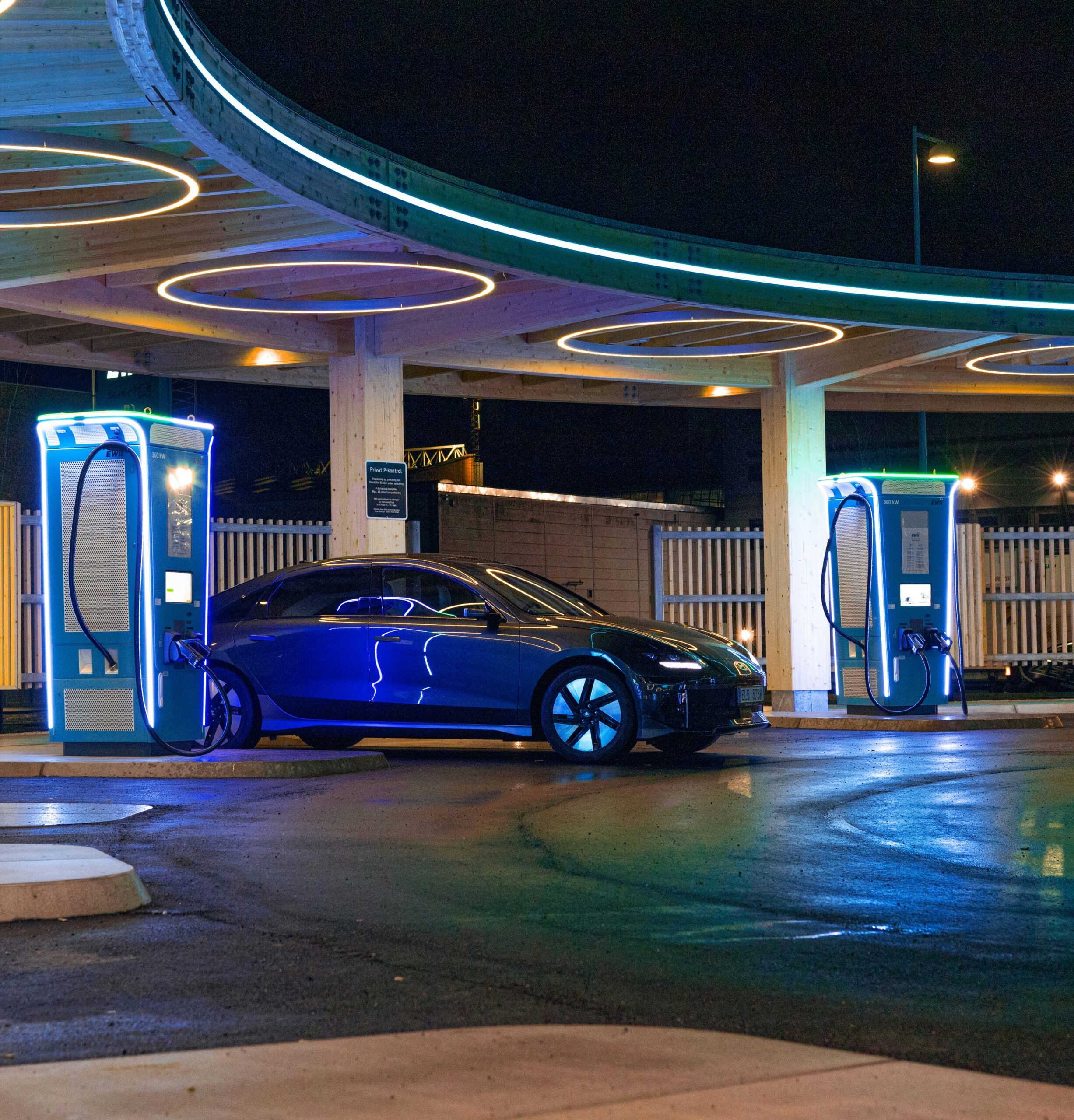
The key ideology I try to preach on Slow Down and Save is to save money by reducing overall consumption and eventually transitioning to a more sustainable lifestyle. With this in mind, I became an early adopter of an electric vehicle in late 2024. As more and more drivers switch to EVs, the number of EV chargers in the UK must keep up with demand. And, as it turns out, the UK’s electric charging network is in good health (and expanding rapidly).
At the end of 2025, there were over 106,000 public EV charge points in the UK, with rapid and ultra-rapid chargers expanding the fastest. For most drivers (especially if you have access to home charging), the UK’s EV infrastructure is certainly capable of supporting day-to-day use and long-distance travel.
I drive a Tesla Model 3
I’ve been a Tesla Model 3 owner since November 2024. It’s been a fantastic experience, but very different from running the petrol Vauxhall Corsa I had before. I generally charge at home, on a super-cheap 8.5p/kWh overnight charging tariff. When I visit my Dad (who lives about 90 mins away), he lets me use his electricity for free! And when I take the car on longer trips, I use Tesla’s fantastic Supercharger network. Its simple “plug-in and go” system makes it a no-brainer for long road trips. Plus Tesla users get a discount on the electricity. This is why most Tesla owners charge exclusively at Tesla Superchargers. It just doesn’t make sense to charge anywhere else.

How many electric cars are there on the road in the UK?
At the end of November 2025, there were approximately 1.79 million electric cars on UK roads, representing 5.2% of all cars in the country. There’s been a rapid pick-up over the past five years; at the end of 2021, there were only 400,000 electric cars, 1.2% of the total fleet.

I believe the UK is around 7-10 years behind the world leader in electric cars, Norway. There, 31.8% of all cars are electric, with only 487 petrol cars sold in 2025! Of course, Norway is a very wealthy country with a relatively small population, so achieving these numbers is far easier. Nevertheless, over the next few years there will continue to be a rapid increase in EVs, as people continue to adopt them as in the classic S-curve growth of any new technology.
The UK EV charging network
2025 YTD (to end of November 2025), the total public charging network grew by 18%. Meanwhile, rapid and ultra-rapid chargers – those needed to keep you going on a long journey, grew by 23%. So, the network is expanding rapidly. There are currently 106,000 charge points nationwide, with most of these concentrated around London and the South East. This is partly because London and the South East are the wealthiest regions in the UK, and partly because many homes in London lack private driveways for installing home chargers.

Meanwhile, the total number of rapid and ultra rapid chargers make up a decreasing minority of the network.

In addition to the public charging network, there’s estimated to be over 1 million charge points installed on private driveways.
With the UK’s charging network growing rapidly, and an increasing number of electric vehicles entering the used market, the next few years will become increasingly appealing for more and more people to go electric. If you do plan on buying an electric car, I’d seriously consider buying used.
Many EVs depreciate faster than petrol cars, while the physical degradation of an EV is slower than with petrol/diesel (fewer moving components, and batteries/ electric motors last forever). To be clear, electric vehicles are far more reliable than most people realise – batteries and electric motors have been known to last well beyond 200,000 miles, with some cars lasting a lot longer than this.
Be smart with your purchase – let someone else take the depreciation hit while you still get 99% of a new car.
Conclusion: Is the UK’s EV charging network now good enough?
Overall, the number of EV chargers in the UK has grown quickly to support the continued adoption of electric vehicles. With more than 100,000 public charge points, and rapid chargers increasing quickly, long-distance electric travel is now practical across most of the country. While remote parts of the UK (NW Scotland, parts of Wales) have fewer chargers, the overall infrastructure is growing fast enough to support the continued adoption of electric vehicles.
Big plans for 2026
I’ve got some big trips planned this year, making full use of the UK’s (and Europe’s) electric charging network. In May and June, I’m planning a 2000-mile road trip around northern England and Scotland, while in August, I have another road trip planned with some friends to Spain, to witness the total solar eclipse on August 12th. That will be another 1500-2000 miles. I can’t wait to use the public Supercharger network – there’s something very cool about arriving at a Supercharger and simply plugging in without any faff. I’ll write a blog on each of these trips later in the year.
FAQ
For most drivers, the UK’s EV charging network is already sufficient for everyday use. Drivers with access to home charging may rarely need public chargers at all. Public infrastructure becomes more important for long journeys, and the rapid expansion of high-speed chargers along motorways and major roads has made long-distance electric travel increasingly practical.
Yes, charging at home is usually far cheaper than using public chargers. Many EV owners take advantage of overnight electricity tariffs designed specifically for electric vehicles. For example, I pay 8.5p/kWh, making the cost per mile significantly lower than driving a petrol or diesel car.
Charging time depends on the type of charger used. Home chargers typically take several hours, which works well when charging overnight. Rapid public chargers can recharge many EVs to around 80% in 20–40 minutes. For most drivers, charging becomes a routine part of parking rather than a major inconvenience.
Most EV owners charge primarily at home, especially if they have a driveway where a charger can be installed. Public chargers are mainly used during longer trips or by drivers who do not have access to home charging. As the public charging network continues to expand, relying on public infrastructure is becoming increasingly practical.
Yes, electric vehicle adoption in the UK has increased rapidly over the past few years. There are now well over one million fully electric cars on UK roads, and this number continues to grow as more drivers switch away from petrol and diesel vehicles. As charging infrastructure expands, EV adoption is expected to accelerate further.
Do you think electric cars are the future of driving or are you going to stick to petrol? Let me know in the comments section below:
If you liked this post, here are some others you may enjoy:
- Cycle more to save money (and get fit)
- A no-nonsense guide on how to live a heathy life
- Live a simple life and save a ton of money
- A £20,000 car actually costs you (at least) £5,204 per year
- How to get a good night’s sleep
You can follow me on X, and find me on Pinterest, Instagram and Facebook.
Leave a Reply