
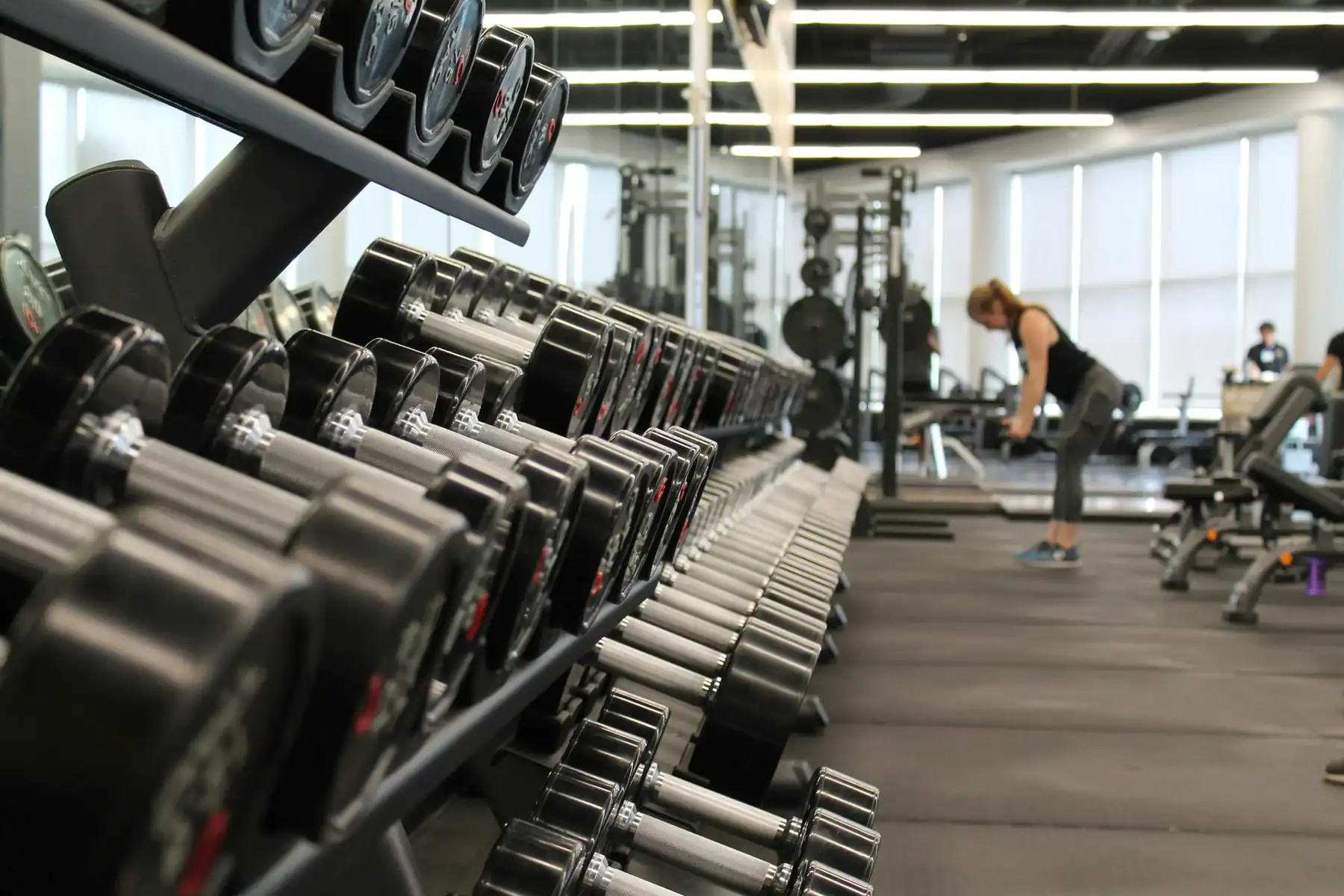
We are all aware of the benefits of exercise. Health services and scientific journals around the world are constantly talking about it. After all, it’s in the interests of governments to have a healthy population. But what does exercise even mean to you?
You might have visions of people doing yoga in a park, perhaps cycling and perhaps – in fact definitely – running. You’ll probably think of a gym too, with sweaty people on treadmills, bikes and rowing machines. And probably a few people – mostly big guys – weightlifting. But it turns out that lifting weights is fundamental to maintaining a healthy body. There are a number of (surprising) benefits to lifting weights that most people are not aware of.
Cardio is given more emphasis than lifting weights
Running has many benefits beyond the obvious (but extremely important) cardiovascular health improvements. In fact, when it comes to cardio exercises, there are many options (cycling, rowing, spinning, swimming, playing sports, running etc). I prefer running as it’s an exercise I’ve grown to love over the 10+ years I’ve been lacing up my trainers. But here’s the thing – building strong muscles and bones largely requires resistance training (lifting weights).
A lot of people neglect weightlifting (including myself for many years) as not being important for general fitness. You’re so wrong if you believe this. It turns out that, almost always, poor metabolic health goes along with being under-muscled. Your muscles are what keeps your skeleton (bones) upright and intact. The more muscle you have, the more protected you are. Muscle is not just about strength or appearance – it is a critical organ for metabolic health, resilience, and survival as we age.
Regular weightlifting and improving your muscle mass is very important for longevity, because:
Muscle helps to preserve metabolic health
Muscle is a major site of glucose disposal (your muscles consume glucose much faster than any other organ in your body). This improves your body’s ability to control blood sugar levels and reduces the risk of Type 2 Diabetes (which is one of the most widespread and deadly diseases in the world).
Protects against age-related muscle loss
Muscles lose mass as we age (known as sarcopenia) – this is natural but the muscle loss begins gradually from mid-life, not suddenly in old age. The process can be slowed or even reversed in individuals who practise regular weightlifting. A higher baseline of muscle mass provides a buffer against sarcopenia, helping to maintain function for longer.
Reduces risk of falls and fractures
Stronger muscles improve balance, coordination and joint stability. This lowers the risk of falls significantly (a major cause of death and disability in old age). This hits surprisingly close to home for me because all older members of my family had at least one serious fall as they aged. The decline is more apparent when it’s happening in front of your eyes.
Supports independence and quality of life
Adequate muscle mass enables daily activities (walking, lifting, standing up, carrying shopping) well into later life, delaying dependency on others. Maintaining independence strongly correlates with psychological wellbeing, social engagement and lower mortality risk.
Reduces all-cause mortality
Higher muscle mass and strength are consistently associated with lower all-cause mortality, independent of body weight. Muscle effectively acts as a protective tissue, not just a marker of fitness.
Acts as a metabolic and protein reserve
Muscle provides amino acids during illness or stress, aiding recovery, immune function and the health of vital organs.
Supports bone density
Muscle contractions load the bones, simulating bone maintenance and regrowth. This reduces the risk of osteoporosis (brittle bone disease) and fractures/ breaks as we age.
Enhances immune function and stress tolerance
Muscle helps the body respond to stress and inflammation when needed – and then return to normal conditions efficiently. (Inflammation is the universal alarm and repair system used in your body.)
Correlates strongly with strength – a key longevity marker
Increased muscle mass underpins improved strength, which reflects solid integrated function across all areas of the body (nervous, muscular and metabolic systems). In other words, strength is highly correlated with the overall wellbeing of the body – it reflects a “well-oiled machine” i.e. the organs of your body working in harmony with each other.
If you’re young, you may wonder why this is even relevant – after all, a lot of the focus here is on old age. But for younger adults, the key is to get into regular weight training now, when it’s easier to establish habits and when training is less difficult to recover from. This helps to set the trajectory for the rest of your life – it’s not necessarily about staving off frailty just yet, but is more about never reaching it as early or as severely in the first place.
Large observational studies have shown that people who regularly perform muscle-strengthening activities have significantly lower risk of all-cause mortality (up to a certain point).

Lifting weights is a rare behaviour which has positive spill-over effects into almost every domain of life. Here are some additional benefits:
It improves your physical appearance
Going to the gym will turn you into a badass Everyday Athlete, dramatically improving your physical appearance and boosting self-confidence. Improved strength changes posture, gait and how you physically occupy space. This will gain you respect from friends and colleagues, and might even improve your dating life!
Improves mood, focus and overall productivity
You’ll get more stuff done and have more productive and thoughtful days with improved musculature and overall fitness. You’ll also feel more positive about yourself.
Improved sleep quality
Particularly deep sleep, which positively feeds back into recovery, cognition and emotional stability.
Understanding of delayed gratification
Progress in resistance training is slow, but you feel a deep sense of accomplishment for those small gains. This encourages you to appreciate the small things.
Better ability to control emotions
Regular resistance training (or exercise in general) improves tolerance to discomfort and effort, which transfers to improved stress management outside of the gym. You also improve your own internal belief in your ability to handle difficult things.
Reduced medical bills
This is now obvious from the host of positive physiological benefits of weightlifting mentioned above. This could save you many thousands over your lifetime!
In conclusion
Despite the stereotypes, lifting weights doesn’t just have to be for big guys. (I go to a gym where the weights area has a diverse collection of body types and ages – both male and female, right up to retirees in their 60s and 70s!) Lifting weights is for everyone – should be for everyone. It’s an important part of living a healthy life, is just as important as cardiovascular exercise, and you should integrate it into your exercise regime as soon as possible. An ideal exercise regime should integrate both cardiovascular and resistance training in roughly equal measure.
The good news is that no time is too late to start – beginning is the most difficult part, as it is with any new habit. Once you take the first steps (or lift the first weights!), it’s not so difficult to keep going. You don’t need to become obviously toned or muscled either. This is about building functional strength and stability, not about how much you can bench press. You don’t have to go to the gym to bulk up or get a six-pack – you’re there as a Life Athlete to build yourself a strong and functional future!
FAQ
Yes. The benefits of lifting weights go far beyond building muscle. Strength training improves metabolic health, supports bone density, enhances balance and coordination, and reduces the risk of chronic diseases such as Type 2 diabetes. Regular resistance training is also associated with lower all-cause mortality and better long-term physical resilience as we age.
At least two to three times per week. I go to the gym 3-4 times per week, with intense 1 hr 20 min sessions each time. This means focussed training – no scrolling on my phone and brief recovery between sets (not sitting around for long periods of time). Training every other day allows your muscles to recover between sessions while still simulating growth and adaptation.
Both forms of exercise play different but complementary roles. Cardiovascular exercise supports heart and lung health, while lifting weights builds muscle, improves strength and maintains bone density. Peter Attia suggests the ideal exercise ratio for longevity is 60% strength training and 40% cardio.
Yes, it’s never too late to begin strength training! Many studies show that even people in their 60s, 70s and beyond can increase muscle mass and strength through regular resistance training. Starting slowly with proper technique and gradually increasing resistance allows beginners to gain the benefits of lifting weights safely.
Not necessarily. While lifting heavier weights can help build strength more efficiently, many benefits of lifting weights can be achieved with moderate resistance performed consistently. Bodyweight exercises, resistance bands, or lighter dumbbells can all improve muscle strength and metabolic health when used regularly and with proper technique.
Benefits vary depending on age, frequency and intensity, but most people notice improved strength and posture within 4-8 weeks of consistent training. Changes in body composition and metabolic health typically take a few months, while long-term protective effects on bones, muscle mass, and resilience accumulate over years.
Have you started lifting weights recently? What are your experiences with it?
If you found this article interesting, you might also enjoy:
- Building fitness for a longer life
- A no-nonsense guide on how to live a healthy life
- Why you need to embrace discomfort
- How to get a good night’s sleep
You can follow me on X, and find me on Pinterest, Instagram and Facebook.
Reference: Momma et al. (2022). Muscle-strengthening activities are associated with lower risk and mortality in major non-communicable diseases: a systematic review and meta-analysis of cohort studies. Br J Sports Med; 56:755–763
Leave a Reply