
Why do we feel so good after going for a run or crushing a workout in the gym? That feeling – of accomplishment and raw satisfaction – is hard to beat. Embracing discomfort to achieve personal growth gives you one of life’s most visceral pleasures.
As I always like to say: time spent exercising is never wasted.
Similar feelings come from other things too, though – completing all your chores on a weekend, spending time to cook delicious, restaurant quality food in your own kitchen, setting a goal to read a book a month for a whole year – and finishing after only 9 months.
Doing difficult things provides a profound sense of accomplishment, one of life’s most satisfying feelings. Embracing discomfort for growth is one of the fastest ways to improve both your mental and physical resilience.
Discomfort, responsibility and true happiness
From @SahilBloom on X: If happiness was just about comfort, we’d be happiest just sitting on the sofa all day – but we’re not.
Victor Frankl, the Holocaust survivor and psychologist, had some words to say on the subject:
Freedom, however, is not the last word. Freedom is only part of the story and half of the truth. Freedom is but the negative aspect of the whole phenomenon whose positive aspect is responsibleness. In fact, freedom is in danger of degenerating into mere arbitrariness unless it is lived in terms of responsibleness. This is why I recommend that the Statue of Liberty on the East Coast be supplemented by the Statue of Responsibility on the West Coast.
He suggested that: When we overcome something hard, we create a story about ourselves that we’re proud of. No-one feels proud to sit on the sofa all day. So get off your ass.
Comfort does not equal happiness
Those who have faced life’s toughest questions, like Victor Frankl, discovered that comfort – and even freedom – does not equal happiness. True fulfilment requires responsibility. Seek it, or create it, and pursue it relentlessly.
Difficult things sharpen our skills – running to improve VO2 max, having difficult but important conversations with friends and family to strengthen your emotional and empathetic tool set, reading to improve vocabulary and mental health, cooking great food at home to improve your diet.
These things build our confidence by proving to ourselves that we can do hard things. Being confident will attract like-minded people around you, opening up further doors to grow in all areas of life. It becomes a self-improving circle of positivity after this!
Daily practices to embrace discomfort for growth
Embracing discomfort is just as important. We don’t want to get too used to comfort. Difficult things help us to overcome hedonic adaptation, so we can appreciate life’s pleasures even more.
Comfort quickly becomes boring – which is why I occasionally drive without the air conditioning on in my car during summer – to remind myself of how lucky I am to have it. Why take the escalator or lift when there are stairs? I have legs that work perfectly well. Let’s use them. (Side note: did you know than only 2% of people take the stairs when there is an escalator or lift option?)
Why drive the 3.5 miles to the gym when I can cycle? Why force myself out of bed at 06:00 every morning and go for a 1.5 mile walk in the cold? I feel much happier after doing these things. Struggle, even in small amounts, keeps life interesting and helps you appreciate the easier moments.
Earned Pleasures
I tend to find that the best rewards in life are earned pleasures. Rest feels better after effort, food tastes better after cooking (or growing!) it yourself, earning money feels better after hard work, investing feels better after giving your investments the time to grow, you even feel better (and sleep better) after a hard day of exercise or work.
Doing these things builds discipline, giving you the ability to stay grounded when life tests you, and also reinforcing the skills you need to continue doing hard things throughout life.
The important point here is that long-term happiness is more about progress than pleasure. A life of pursuing difficult, meaningful goals gives you a reason to get up in the morning. There’s a deep satisfaction in looking back and knowing you didn’t take the easy road.
Your daily dose of discipline
Here’s some difficult things that you can do every day:
- Take the stairs. Become part of the 2% of the population who do this regularly. Regular stair climbing can lead to a 24% reduction in all-cause mortality.
- Walk or cycle to work, instead of taking the bus or driving.
- Have a cold shower in the morning. Along with thoroughly waking you up, this brings a host of other benefits, such as improving your circulation and immunity, reducing inflammation and muscle soreness, and may even help to combat depression!
- Park far away. When you need to do some errands. Park as far away as possible from your destination. It may not seem like much, but those extra steps will soon add up!
- Establish a “buy-in”. Link rewards to effort. Want that chocolate bar or Netflix binge? Earn it with a small challenge first – a 5km run, a plank, or a workout.
- Carry whenever you can. This is a fundamental human action that strengthens your muscles and improves stability. So carry heavy loads as much as possible – from shopping, to weights in the gym, to your kids, to whatever else you can think of. Carry, carry, carry!
- Practise mental self-development. We all know we should exercise more often. But what about exercising your brain, and learning how to use your brain more efficiently? From simple things such as brain-training apps, reading amazing blogs, to reading self-development books like The Seven Habits of Highly Effective People, there’s a wealth of information out there to help you.
- Do something that scares you slightly. This could be speaking up in a meeting, introducing yourself to someone new, or sharing your work online.
- Do an extra rep and run an extra minute. Small acts of physical effort like this build both stamina and discipline.
How I embrace discomfort for growth: a personal story
Whenever I go away somewhere, I love to spend as much time as possible in nature – and I try to combine this with a lot of physical activity. It’s in these moments where I’m happiest. I love mountains, lakes, forests and hiking.
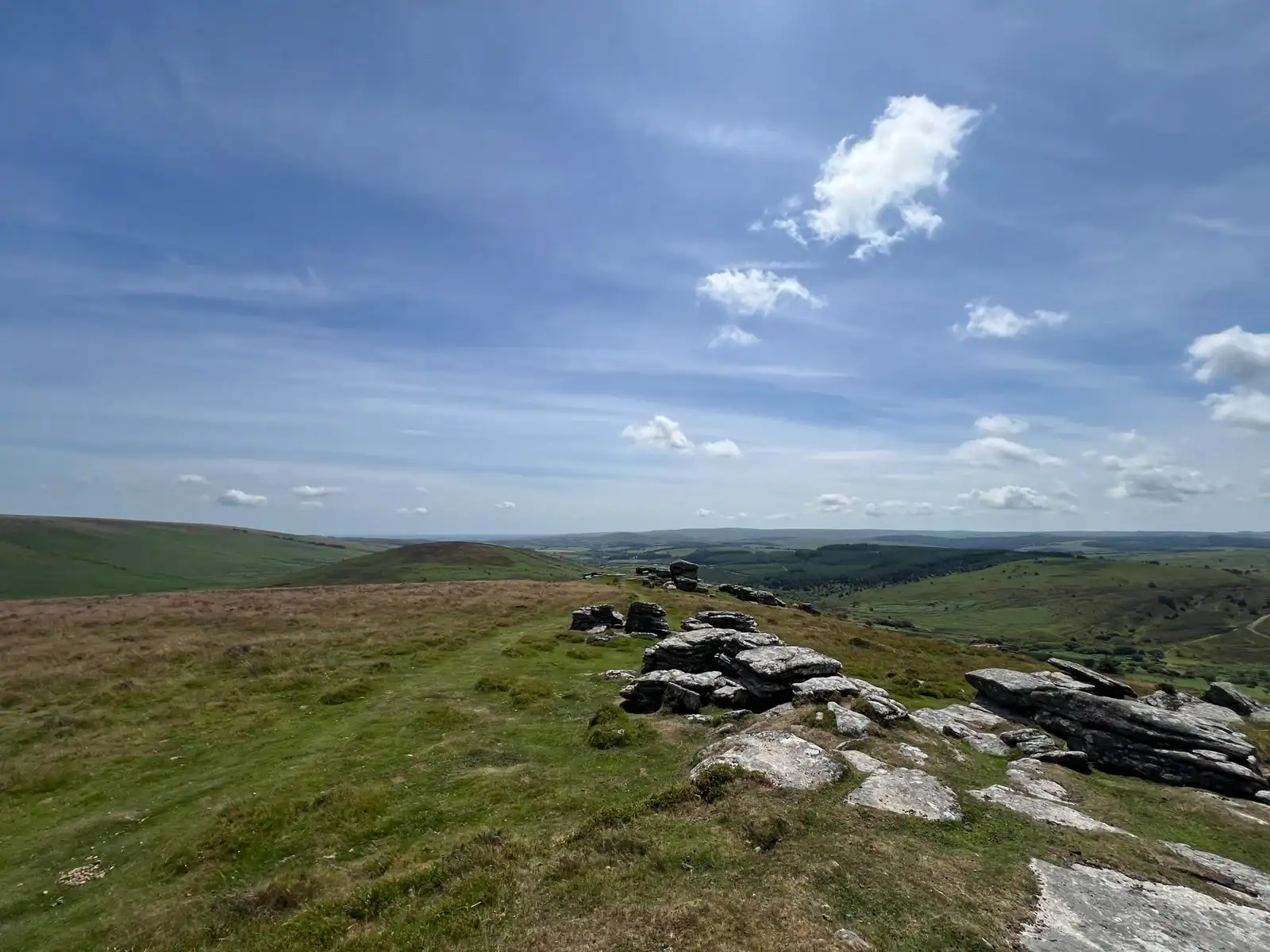
In the summer, I took a lovely holiday to south-west England, around Devon and Dorset, with my sister. We spent several days staying in a remote barn in Dartmoor National Park. It was beautifully peaceful, with just the wind, trees and the birds providing the soundtrack. Hundreds of swallows would swoop and dive around the farm, from dawn till dusk, in search of insects. It was the perfect retreat from the busyness of life.
There were multiple paths that led straight from the front door – so why bother using the car to drive to some other, equally beautiful part of the national park? We didn’t – instead we planned an adventurous hike around the nearby tors (hills).
The day began with an early rise (06:30), and a short walk in the morning sunshine to get light first thing, followed by a hearty breakfast and time to read our books (which happened to be Outlive by Peter Attia for me). And then, in beautiful weather, we headed out on an 11 mile, 20,000+ step hike along the hills, with stunning views 25+ miles away to the south coast of Devon. We bought our own food, and just walked and talked all afternoon, with beautiful views and good conversation to keep us going.
Knowing we’d challenged our bodies all day, we returned to the barn and cooked a well-earned, delicious dinner. The entire walk was a moderate-hard workout (especially the steep uphill sections), and it would be easy to shy away from such a challenge while on holiday, but we both stepped up to it.

Actionable takeaways: embrace discomfort for growth
- Step out of comfort daily: Take the stairs, walk or cycle, have cold showers – small challenges build resilience.
- Commit to physical effort: Push for an extra rep, longer run, or heavier lift – discipline grows with action.
- Take responsibility: Create meaningful challenges in work, relationships, or personal projects.
- Learn through discomfort: Difficult tasks sharpen skills, build confidence, and expand mental capacity.
- Seek earned pleasures: Enjoy rest, food, and rewards after effort – reinforcing motivation.
- Expand boundaries: Try something that scares you, speak up, or pursue an ambitious goal.
- Consistency over intensity: Small, repeated efforts compound into lasting growth and personal fulfilment.
By choosing to embrace discomfort every day, you build discipline, confidence and long-term happiness. Life will throw challenges your way whether you ask for them or not. The trick is to embrace them, to step willingly into the challenge – because nothing feels better than a hard-earned win.
Thanks for reading! Other posts you may find interesting:
- Building fitness for a longer life
- You need to be more disciplined to increase productivity
- Investing in the stock market and building wealth
- Live a simple life and save a ton of money
You can follow me on X, and find me on Pinterest and Facebook.
Leave a Reply