
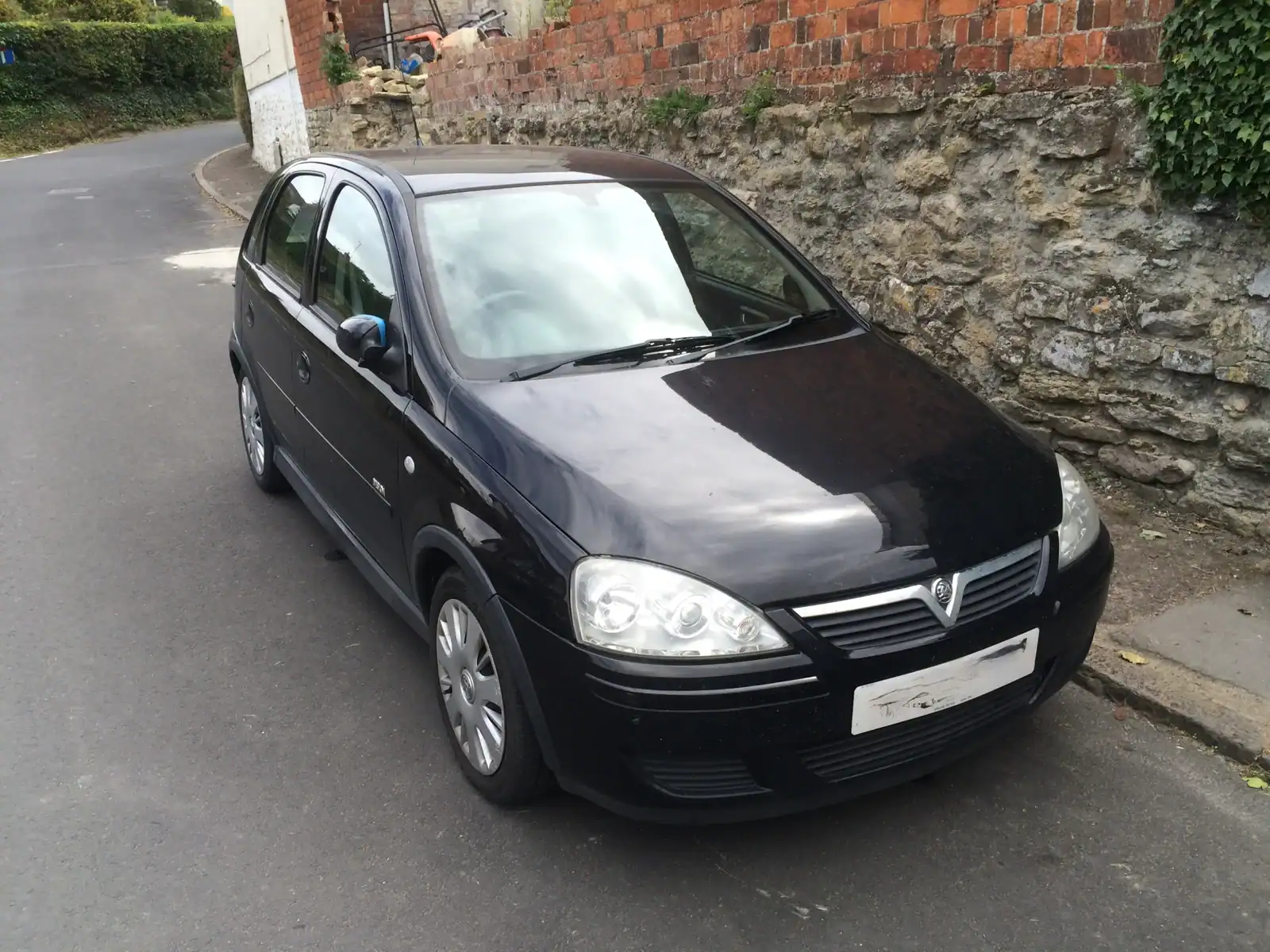
Back on December 14th 2024, a tearful lump was forming in my throat. It was time to say goodbye to my first car. After eight and a half years, I was replacing it my 2006 Vauxhall Corsa with a Tesla Model 3.
That little Corsa taught me far more than just how to drive. It taught me about money, risk, confidence, and what actually matters when you own a car.
Which brings me to an important question: are cheap cars worth it in the long run?
Most people assume newer is better – safer, more reliable, more comfortable. But what if driving an older, inexpensive car could actually save you thousands, reduce stress, and even make you a better driver? For most people, a car is one of the most expensive purchases they’ll ever make – and also one of the worst financial investments.
In this article, I’ll break down the real costs, the unexpected benefits, and the lessons I learned from owning a true “beater” for nearly a decade.
Why cheap cars are so much less expensive to own
First, the obvious… I paid just £1,300 for my Vauxhall Corsa in July 2016, and bought it off a friend. It had 59,000 miles on the clock, pretty low mileage given its 10 year age at the time. In the UK, the Corsa is one of the most common hatchbacks, so finding spare parts was easy. There were also many common parts with other small hatchbacks from different manufacturers. This meant that I could take it to any garage with a problem, and they were easily able to order spare parts and fix the issue.
It had decent fuel economy (~47MPG UK/ ~39 MPG US), and would do 400-450 miles on a tank (which typically cost between £40-50 to fill up, depending on fuel prices).
After paying close to £2000 for insurance in my first year driving (as a 22 y/o male), insurance costs dropped dramatically in subsequent years when insurers realised I did not drive like a moron. I think in the second year, I was paying less than £1000, and eventually annual insurance dropped below £300. This compares to average insurance premiums of ~£560 – £730 across the UK as of early 2026.
Why cheap cars reduce stress and financial risk
A beater car is “an inexpensive, often older vehicle with cosmetic damage (dings, scratches) that is reliable enough for daily driving but cheap enough that repairs won’t be financially devastating.”
There’s no strict definition for how much to pay for a beater car, but I’d suggest somewhere in the region of £1500. If you don’t care about damaging it and it’s cheap to repair, then it’s probably a beater.
The clue really is in the name here. You just don’t worry about scratching it or dinging with stones. Obviously you don’t want any major damage that would compromise the safety or drivability of the car, but otherwise, the feeling you get from not caring/worrying is very liberating.
For me, a good definition of a beater is how much you care about driving it down a narrow country lane in winter. You shouldn’t care about the mud or dirt, or even the potholes and ominous risk for a stone to fly up and damage the bodywork. And you certainly don’t mind reversing your car into a hedge to let somebody else past.
The narrow country lane is the natural home of the beater car. It’s a place where you will feel more confident than people driving their shiny new cars, because you simply don’t care. If you get home and find a new scratch or dent on it, great. It’s another war mark to add to the patina of age that the car has already accumulated.
The real benefits of owning a cheap car
Because the car is inexpensive to buy and repair, insurance costs are generally very low (unless you’re a new driver, like I was). And if something does need repairing, you might be inclined to accept second hand parts to save even more money. As long as it does the job, any spare part will do. And it’s likely there’ll be far more off the shelf spare parts that you can buy – from Halfords for example – and replace yourself, without a garage ever being involved.
There’s no statement with a beater car. Not that anybody really cares what you drive anyway. The car is simply there to get you from point A to point B. Nothing more. If it can do that reliably, you’ve got a great car.
You don’t worry about it getting dented in a car park when someone else opens their door into it. You don’t even worry about parking it in a dodgy area – in fact, it’s more likely to fit in, in such a place – and a would-be criminal is unlikely to give it a second thought.
A beater will teach you to drive properly
A beater is a proper car. One with manual transmission, three pedals, no cruise control or any luxuries that modern cars offer. This will teach you to really drive. No reversing cameras, hill start assist and automatic handbrake. Hell, my car didn’t even have central locking (it broke after a couple of years). This is proper driving with no aids.
I had to learn to do real hill starts by balancing the clutch and throttle and by releasing the handbrake at the right time. (Eventually, the handbrake became almost useless and wouldn’t hold the car on steeper hills – so I had to use the foot brake as well, and then rapidly come off this and find the biting point before I started rolling down the hill!).
I had to sit with my foot at the right pressure on the throttle to keep a consistent speed on the motorway. I had to use the mirrors properly when reversing. No cameras to help there. I had to use my arms and eyes to make sure I wasn’t drifting around in my lane on the motorway – no lane assist as I have in my current car.
And you know what? I’m glad I had to do all these things. They taught me to be a more aware driver, perhaps even a better driver. I had to rely on my own senses rather than driving aids. Even when driving modern cars, having these skills as a backup to the driving aids they offer is very useful. The car isn’t always right.
Cheap cars give you a more visceral driving experience
I learned the limits of my Corsa quite quickly, as they were available for me to explore and not hidden behind a veil of driving aids. I discovered the traction limit of the tyres when it was wet and the car was fully loaded (try pulling off in a front-wheel drive car on a wet, steep hill with wet leaves and a boot full of stuff – you’ll soon find the limit of grip).
The speed limit of the car was more defined by the excessive noise it created at high speeds, rather than how fast the car could actually go. This natural speed limit prevented me from speeding, and just generally driving aggressively. Even overtaking felt risky.
I discovered how fast it could accelerate (not very quickly), and it turned out that I needed to use the acceleration to it’s max when pulling out of busy junctions or when joining the A41 on some of its badly designed and unsafe slip roads (which are only 50m long after a sharp turn).
I got a flat tyre after driving over a sharp, submerged pothole on a country lane at 20 mph one December. This taught me how to change a tyre – which I did, successfully (with the help of a friend). I felt very good with myself after that. Too bad my Tesla doesn’t run with a spare tyre.
My car’s heater didn’t work for the first four years I owned it (the air conditioning worked beautifully), so I was freezing cold when driving in to work on a cold winter’s morning, and I had to spend extra long defrosting it by hand. I remember having to wear gloves to drive, but by the time I got into work, my fingers were still too cold to type anything. I had to wait a few extra minutes for them to thaw out.
Eventually, the stereo in the car broke, so I spent the final six months driving around listening to music through a small, portable bluetooth speaker that I stuck to the centre console with Velcro.
Owning an older car does have some drawbacks:
- Headlights won’t be as bright as on modern cars. This is a problem when driving at night, especially when driving on a busy single-carriageway A road and there is a constant stream of cars coming the other way. I may as well have been holding two candlesticks in front of the car. Good luck trying to see anything.
- Things will break (reliability). Along with the above mentioned heating and stereo issues, I had a couple of (hilarious in retrospect) instances where one of the windscreen wipers flew off the car while driving – in one case leaving the metal stump to scrape along the window for 20 minutes before I could finish the journey. I also had to fix the headlights and side lights multiple times, and even replace a plastic wheel arch which mysteriously fell off during an MOT… (I got the garage to replace it for free). I had to replace the brakes once, went through several sets of tyres and I also had some major reliability issues with the engine. At least with a cheap car, you know things are more likely to go wrong, and the cost of replacement should be relatively low.
- Long journeys. A simple truth here. A beater car is not good at long journeys. They will be louder than modern cars, not as comfortable and have no driving aids like cruise control or lane assist to help the driver. I once drove my Corsa down from Newtonmore in the Scottish Highlands to Tooting in SW London in one day. (A distance of 530 miles.) It was… not pleasant.
- Slow acceleration. This seems like a non-issue. But having a fast-accelerating car is much safer for overtaking, and also for getting up to speed on slip roads. Top speed is irrelevant in the real world (as long as it’s over 70mph), but acceleration certainly isn’t.
- Not as safe (as newer cars). Some people will argue this – and while there is a certain element of truth to it (fewer safety features and driving aids, and older cars are often smaller and ‘feel’ less safe), I’m a firm believer that how safe you are is far more a factor of your own driving style than the car you are in.
- Not as quiet. This might get irritating on long journeys, but I’m sure you can put up with it given how little you paid for the car.
What happened to my Corsa?
Throughout my eight and a half year ownership, and over 63,000 miles driven, I’d estimate I spent an average of £1500 per year on maintenance. I kept the car on the road by fixing at least two major mechanical issues that most other people would have just sold it on for. It just wasn’t a reliable car (and had proven that multiple times, despite me forking out more money to fix it).
After the stereo broke, I began looking for a new car… I spent about six months looking before I finally settled on a Tesla. And the timing was good too, because just after I had purchased the new car, the Corsa had a major oil leak, which caused oil to leak all over the engine bay and very close to the front disk brakes. At this point, I’d had enough and finally sold the car.
Why you should buy a beater car
Despite the relatively high running costs of my particular beater car (I don’t recommend buying an old Vauxhall Corsa), I still estimate it saved me at least £20,000 vs buying a ~4-5 year old car for around £20,000 and keeping it for the same time. That’s money that could be invested and used to build long-term wealth instead.
I’m immensely grateful for the driving experience it gave me, and all the unique experiences it afforded. It was a fantastic introduction to driving, and allowed me to learn without worrying about expensive repair jobs or insurance claims. This is the kind of peace-of-mind which all new drivers need! Overall, it’s made me into a more confident, more skilful motorist – all while saving me a lot of money vs buying a newer car.
Are cheap cars worth it? My final verdict
In my experience, absolutely – but only if you understand what you’re getting.
A cheap car won’t give you comfort, status, or the latest technology. What it will give you is financial freedom, peace of mind, and a far lower cost of ownership. You’ll worry less about scratches, spend less on depreciation, and learn skills that many modern drivers never develop.
Yes, things might break. Yes, it might be noisy, slow, and occasionally inconvenient. But even with those downsides, I still estimate my old Corsa saved me tens of thousands of pounds over the years.
More importantly, it changed how I think about money. It taught me that the best financial decisions aren’t always the most glamorous – they’re the ones that quietly compound in your favour over time.
So if you’re asking yourself whether to spend big on your next car, take a step back. A cheap car might not look impressive – but it could be one of the smartest financial decisions you ever make.
FAQ
Cheap cars can be worth it if reliability is acceptable. They have lower upfront costs, cheaper insurance, and minimal depreciation. However, maintenance costs can be higher. For many drivers, especially beginners, the overall cost savings still make older cars a smart financial decision.
Older cars can require more frequent repairs, but parts are often cheaper and widely available. While maintenance costs may be less predictable, they are usually still lower than the depreciation cost of a newer vehicle.
Yes, in most cases. Cheap cars avoid the steep depreciation that newer cars experience and typically have lower insurance costs. Even with occasional repairs, the total cost of ownership is often significantly lower, especially if the car is reliable enough for everyday use.
Newer cars generally include more safety features, such as lane assist and automatic braking. However, safe driving behaviour plays a major role. While older cars may lack modern technology, a careful and attentive driver can still drive safely in a well-maintained vehicle.
I hope you found this post useful. Here are some others you may enjoy:
- How to buy a new (used) car
- A £20,000 car actually costs you (at least) £5,204 per year
- Are there enough EV chargers in the UK in 2026?
- Retire Early by Not Being a Moron with Your Money
- How I saved money on Airbnb using gift cards
You can follow me on X, and find me on Pinterest and Facebook.
Leave a Reply