
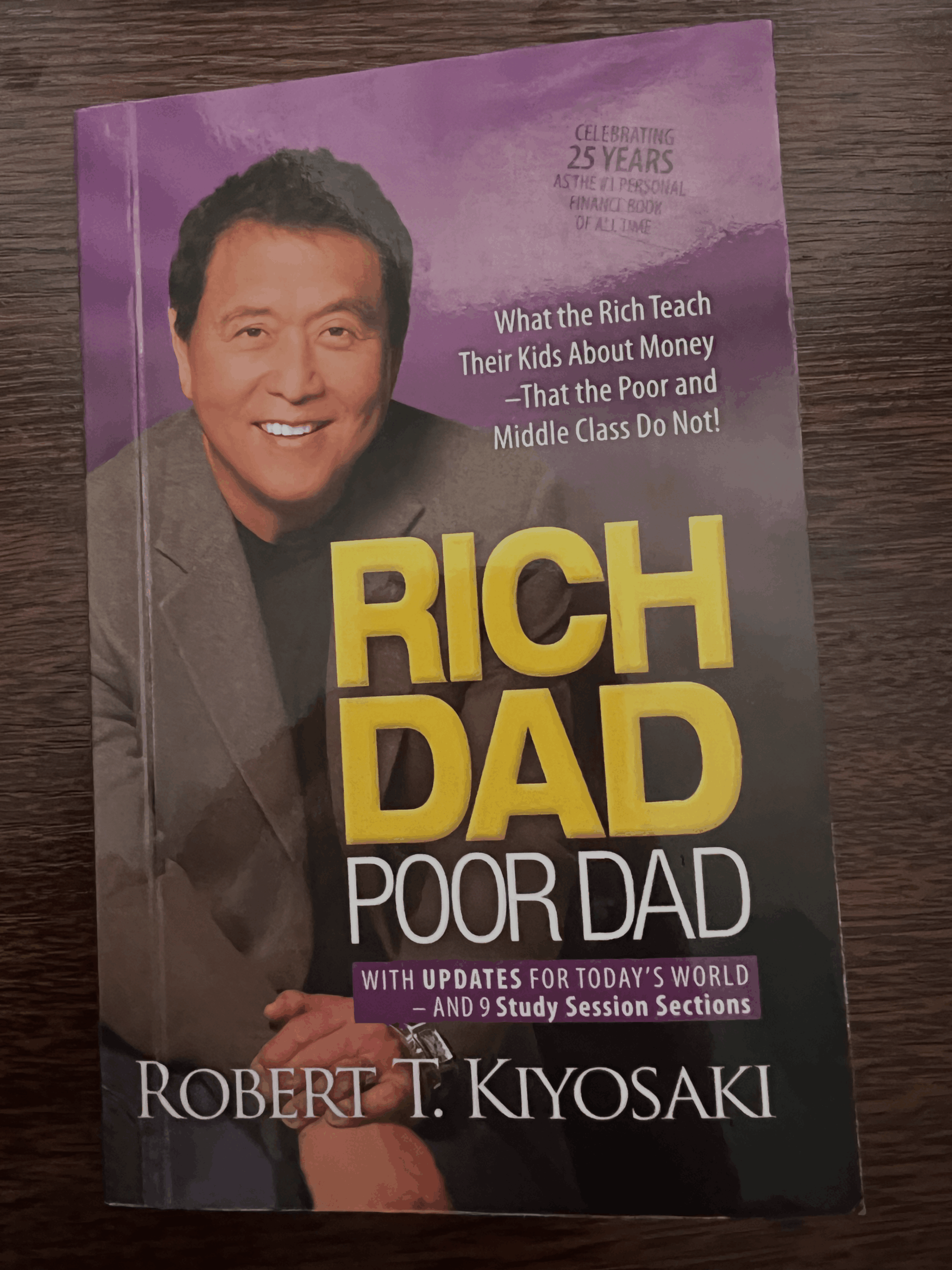
Since its release in 1997, Rich Dad Poor Dad has sold over 44 million copies worldwide, and is widely considered to be the best-selling personal finance book of all time. It has introduced countless people to concepts like assets, liabilities, passive income, financial independence, and escaping the “rat race”.
However, this book is not a detailed investing manual like The Little Book of Common Sense Investing, nor is it a step-by-step financial roadmap like The Simple Path to Wealth.
Rich Dad Poor Dad is primarily a book about your financial mindset.
Assets vs liabilities
The core idea of the book is simple: rich people acquire assets. Poor and middle-class people acquire liabilities they think are assets. Kiyosaki repeatedly emphasises the importance of owning things that generate income or appreciate in value, rather than constantly spending money on status symbols and consumption.
Assets are broadly described as things that put money into your pocket:
- Businesses
- Investments
- Real estate
- Stocks
- Intellectual property
Liabilities, meanwhile, take money out of your pocket.
Many people spend years focussed on earning more income, while paying very little attention to how their money is being allocated. Rich Dad Poor Dad encourages you to start viewing your financial life through the lens of ownership of assets, cash flow, and long-term wealth-building.
The Rat Race
Kiyosaki argues that many people become trapped in a cycle where increasing income simply leads to increasing lifestyle costs. Lifestyle inflation, if you will. Promotions lead to bigger homes, newer cars, and more expensive lifestyles – but not necessarily greater financial freedom. This is where the book resonated strongly with me.
If your spending continually expands to match your income, building long-term wealth is impossible, regardless of how much you earn. It’s more important to control your expenses than to increase your income.
In many ways, the book is really about reclaiming control over your time. Money itself is not portrayed as the ultimate goal. Freedom is.
Financial education matters
One of Kiyosaki’s strongest arguments is that traditional education often does a poor job of teaching practical financial skills. Schools teach mathematics, science, history, art, literature – but many people leave formal education with little understanding of how money works.
- Investing
- Taxes
- Debt
- Cash Flow
- Business ownership
- Financial statements
Are all a mystery.
Many adults spend decades earning, borrowing, spending, and investing money without ever receiving formal financial education. Books like Rich Dad Poor Dad are an entry point into personal finance because they introduce these ideas to a new and broad audience.
Even if you eventually move on to a more evidence-based investing book after (The Little Book of Common Sense Investing is recommended), this book still serves as an important catalyst.
Where I think the book is weaker
While I enjoyed reading the book overall, I do think it’s important to approach some of its claims with caution. Unlike John Bogle’s work, which leans heavily on decades of market data and evidence, Rich Dad Poor Dad is far more anecdotal and motivational in tone. Some of the financial advice is vague, and certain claims can feel exaggerated or overly simplistic.
There is also a noticeable tendency to portray traditional employment somewhat negatively, while glorifying entrepreneurship and real estate investing. For some people, starting a business or building a property portfolio may absolutely be the right path. But for most, steadily investing into diversified index funds through a stable career can also lead to substantial wealth and financial independence over time.
The strongest takeaway from the book is not the specific tactics Kiyosaki talks about, but the broader mindset shift around ownership, investing, and financial awareness.
My overall thoughts
I can see why this book became massively successful: it’s easy to read, memorable, provocative, and full of ideas that challenge conventional thinking about money. Even if you disagree with parts of it, the book succeeds at making you question assumptions you may have had about money for years.
From there, books grounded in evidence and long-term investing principles can provide a much stronger investing framework.
In this sense, Rich Dad Poor Dad is a gateway book – it gets people interested in wealth building.
Conclusion
The enduring appeal of this book is its simplicity. It encourages you to think differently about work, money, assets and financial freedom. For many people, this may be the first time they encounter the idea that financial independence is even possible.
While I don’t necessarily agree with every argument or investing philosophy presented, I still think it has value – particularly for beginners who are just starting to question the traditional Rat Race.
While this books doesn’t provide all the answers, it certainly encourages you to start asking better financial questions. And I think that is quite an achievement.
I hope you found this article interesting. Here are some others you may enjoy:
- Are cheap cars worth it?
- How to get rich as an employee
- Real-Life Financial Independence Stories
- How to manage Your Personal Finances Like a Business
- How to Invest in the Stock Market for Beginners (a Simple UK Strategy)
You can follow me on X, and find me on Pinterest and Facebook.
Leave a Reply