
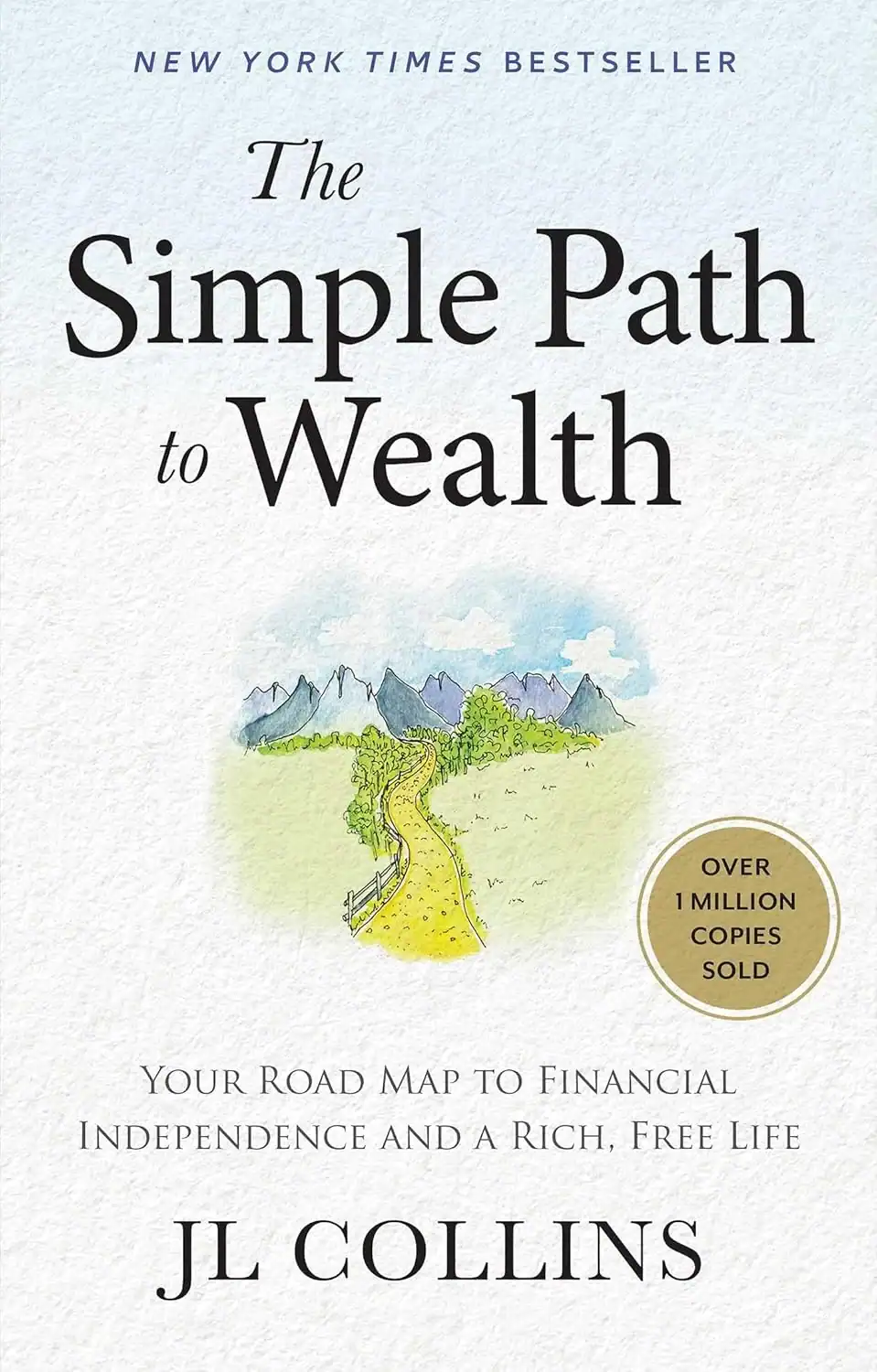
I recently finished reading The Simple Path to Wealth by JL Collins. It’s a book which completely changed my perception on investing and personal finance. If you’ve ever felt overwhelmed by investing or retirement (or unsure where to start), this book offers a refreshing answer: keep it simple, stay the course, and let time do the heavy lifting.
This book is ideal for absolutely everyone, from complete beginners to personal finance and seasoned veterans alike. It may not be the best, or even the most informative investing/personal finance book I’ve come across, but in terms of how the pages weave a clear story together, it’s certainly the most elegant book on the subject you’ll ever read.
What is The Simple Path to Wealth about?
The book grew out of a collection of letters JL Collins had written to his daughter, explaining how to build wealth in a straightforward, no-nonsense way. Unlike him, his daughter simply wasn’t interested in the details around how and why the stock market works, she just wanted to know what to do – and then forget about it. (I suspect this is the case for the majority of the population too.)
Well, the central idea behind his philosophy is this:
You don’t need to beat the market. You just need to own it.
Rather than trying to pick winning stocks or time market movements, he simply advocates investing in low-cost index funds that track the entire market. His philosophy is built on:
- Simplicity.
- Discipline.
- Long-term thinking.
The key lessons from the book
1. Simplicity beats complexity
Investing doesn’t need to be complicated. While billions of dollars are spent every year on expensive financial advisors, fund managers, brokerage fees and taxes, Collins suggests that most people can achieve excellent results by investing in a single broad market index fund.
For US investors, he recommends the Vanguard Total Stock Market Index Fund.
For UK investors, the equivalent would be something like a global index fund – for example, Vanguard FTSE All-World.
This aligns very closely with my own investing approach.
2. Avoid debt like the plague
Collins is extremely clear on this point: high-interest debt is one of the biggest obstacles to building wealth. Before investing, you should eliminate debt and build a cash buffer. It’s not glamorous advice, but it’s effective. There’s a more relaxed approach taken on so-called ‘good debt’ like a mortgage (and in the UK, student loans – which have a much more relaxed repayment scheme than in the US).
3. The stock market will fall
One of the most valuable parts of the book is how it prepares you for market downturns. Collins doesn’t sugar-coat it:
- Markets will crash.
- Your portfolio will fall.
- It will feel uncomfortable.
But the thing is, as he explains, these events are not something to fear – they are part of the process. The key is to stay invested, just keep buying, and to avoid emotional decisions.
4. Financial independence is about freedom
This book isn’t just about investing – it’s about what money allows you to do. Collins frames wealth as a tool that can be used to manage your own time more effectively. This gives you more independence and more flexibility over your employer, and ties in strongly with the idea of intentional living that has been discussed at length on this website.
What I liked most about the book
The elegance with which it explains financial independence and investing is this book’s greatest strength. There’s no overcomplication, financial jargon (and if there is, it’s explained ingeniously in simple terms which make sense – such as the froth at the top of a glass of beer), or unrealistic promises. Just a simple framework that works.
Collins emphasises index fund investing, and the discipline needed to achieve financial freedom. The book also reinforces something I’ve written about before. You don’t need to be clever to build wealth – you just need to be consistent.
Rather than advocating stock picking or expensive mutual funds, Collins focuses on what you can control: fees, taxes and your own emotions. That’s what makes the book so powerful. Why try to beat the market when simply owning it delivers better results than most investors receive? Buying a low-cost index fund which simply tracks the market relies on tried-and-tested methodology which has worked with decades of experience – rather than expensive actively managed mutual funds which (theoretically) work within a computer model.
Which would you rather rely on?
The book does fall slightly short for UK readers
While the core principles are universal, the book is written from a US perspective.
This means:
- Reference to the US tax system.
- US-specific funds.
- Retirement accounts that don’t directly translate to the UK.
For UK readers, you’ll need to mentally map 401(k) to pension, and Roth IRA to ISA.
It’s not a major issue, but does require some interpretation. Fortunately, JL does have an article on his website on how best to invest from a European perspective – so this at least provides some perspective. (I’d strongly recommend reading the blogs and stock series on his website alongside reading the book.)
Is The Simple Path to Wealth still relevant today?
Absolutely. If anything, the message is even more relevant now than ever. With endless financial content online, complex investing strategies and constant market noise, there’s real value in returning to a simple, proven approach.
Who should read this book?
Everyone!
It is relevant to everyone, from all across the investing spectrum, and even those completely new to investing. It provides such a simple, elegant solution to building long-term wealth that there is something to be learned for all.
Verdict
The Simple Path to Wealth certainly lives up to its name, which is what makes it so valuable.
In a financial world full of noise and complexity, JL Collins offers a moment of calm and clarity. He strips investing back to its core principles, and shows that building wealth doesn’t require brilliance, luck or constant decision-making. It simply requires patience, discipline, and the ability to stay the course.
For me, the biggest takeaway isn’t just the investing strategy (although this, too, is brilliant) – it’s the mindset. The idea that wealth is not about status or consumption, but freedom. The freedom to choose how you spend your time, and to live life on your own terms. If you’re looking for a simple, proven approach to building long-term wealth (and don’t want to read another finance book again), this book is as good as it gets.
Thanks for reading. Here are some other articles you may enjoy:
- 7 Best Personal Finance Books to Read in 2026
- The Best Paycheque Routine to Save, Invest and Build Wealth
- How to get rich as an employee
- How to make the most of your ISA
- The 4% Rule – how to know when to retire
You can follow me on X, and find me on Pinterest, Instagram and Facebook.
Leave a Reply