
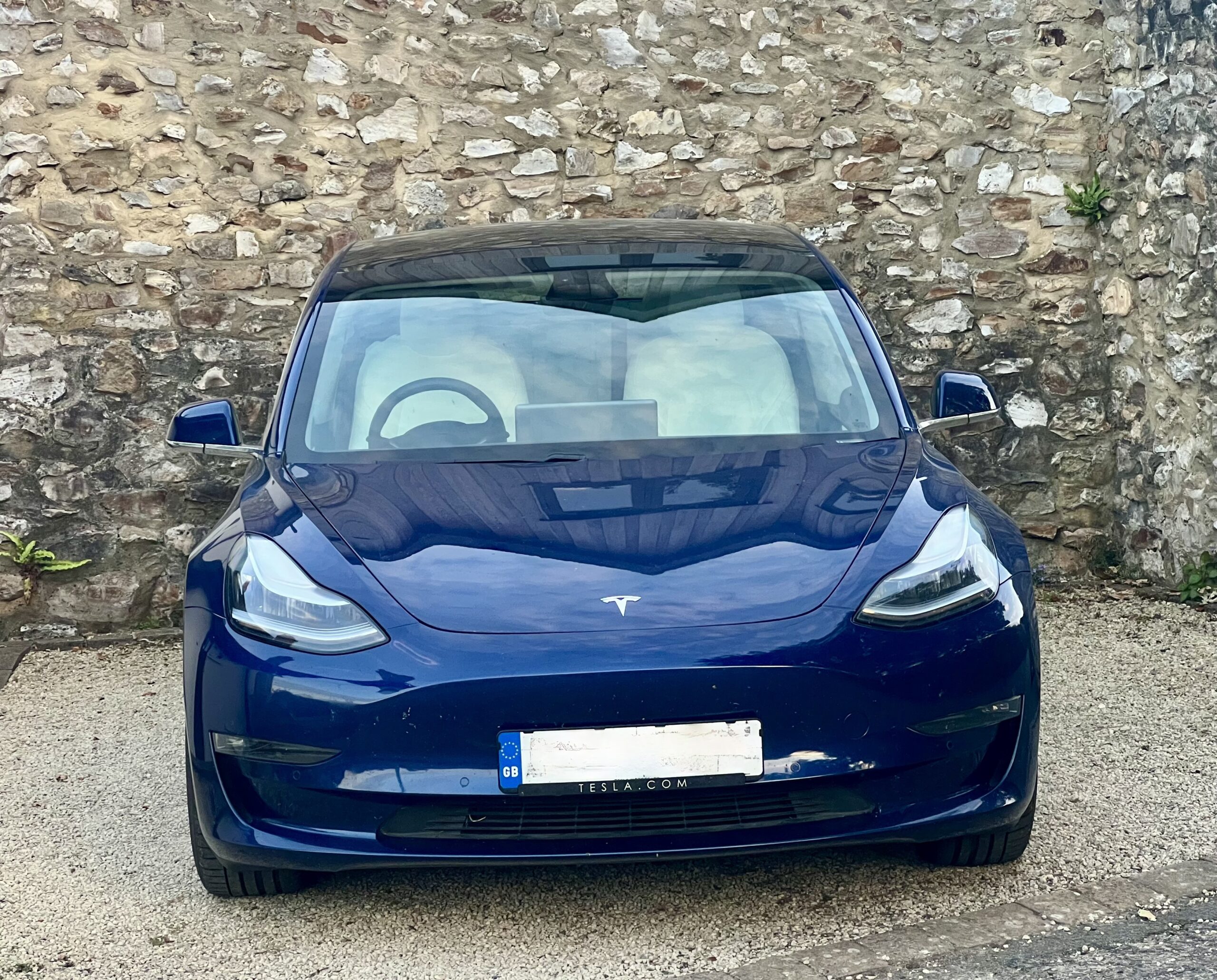
Electric cars are one of the most talked-about technologies – and also one of the most misunderstood. Spend five minutes online and you’ll see strong opinions on both sides. Some drivers swear by electric vehicles, while others are convinced they’re expensive, inconvenient, or not ready for everyday use.
So, are electric cars worth it in the UK?
In this article, I’ll break down the most common concerns about electric cars – from charging and range to cost and reliability – and compare them to the reality based on real-world data and personal experience.
Technological development of ICE cars has been slow and steady
Before I answer any questions though, just consider the development internal combustion engine (ICE) vehicles have had over the past, say, 50 years. There have been improvements across the board – in safety, reliability, comfort and (relatively minor) improvements to performance and fuel efficiency.
But here’s the thing – ICE vehicles today are still fundamentally the same as they were half a century ago. They have gotten bigger and heavier, but they still have broadly similar range, performance and fuel efficiency. There’s been incremental progress, but nothing’s really changed. And – crucially – they still run on the same dirty, smelly liquid that has contributed to major Global Warming during that time.
EV technological development has been rapid
Now consider the development in electric vehicles in just the past 10 years. A decade ago in the UK, there were roughly 10,000 pure-electric cars on the road in the UK, and the market-leading car was the first generation Nissan Leaf. Early iterations of the BMW i3 and Renault Zoe could also be (rarely) seen on the road. These cars had small ranges (perhaps 100-150 miles in favourable conditions), and there was hardly anywhere to charge them up (only around 3,200 public chargers across the country).

Now, just a decade later (at the end of March 2026), there are almost 2 million electric cars on the road (plus an additional 109,000 electric vans). So, it’s clear that the electric vehicle revolution is already happening. There are multiple electric cars with over 450 miles range, and several with over 500 miles! And there are now almost 120,000 public electric charge points across the country.
Electric car technology has advanced at breakneck speed, and this is only with cars developed in Europe. EV technology in China is 5-10 years ahead of Europe, and we’re only just starting to see the impact of that over here. In just the next 10 years, we can expect further rapid advancements in the technology – improvements in vehicle range, huge reduction in cost, massive expansion of the UK’s charging network, and introduction of even faster electric chargers (which will bring rapid charging on-par with filling up a car with petrol).
Rather than bemoaning electric vehicles, we should be exciting about the positive benefits this new technology will bring – not least to the environment. It’s the biggest shake-up the transport industry has ever had.
Common myths about electric cars
Myth: There aren’t enough electric charge points in the UK
Reality: There are almost 120,000 public electric charge points in the UK (as of the end of March 2026), of which ~13,000 (highlighted in the below image), are ultra rapid with >= 150kW charge speed. These are the chargers you’ll typically see at motorway service stations, and can charge your car in 30 minutes or less. For long journeys, these are the kind of chargers Britain needs more of.
The UK’s charging infrastructure is growing at about 15% per year, with hundreds more chargers added every month. Finding data on average wait times at EV charging points in the UK is difficult, but in my own personal experience, I’ve only had to wait for an EV charging spot once (about 10 minutes on a very busy Saturday afternoon).
Here’s the thing – if you can charge at home (like I do), you’ll only need to rely on the public charging network a handful of days each year.

Myth: I won’t be able to drive anywhere – the range of electric cars is too small
Reality: Many electric cars have a range of over 300 miles these days, with some over 400 miles, and a few even nudging over 500 miles. Check out this list of the longest range electric cars currently on sale in the UK. And, from Autumn 2026, the new BMW i3 will be available to order. This promises 559 miles of range! Impressive stuff.
Even as I write this article, the landscape is changing. Mercedes-Benz announced their new EQS saloon, which will do up to 575 miles on a single charge. Of course, all of these long-range vehicles are premium (and expensive) models, only affordable to a small fraction of motorists.
*Note that the WLTP (Worldwide Harmonised Light Vehicle Test Procedure) range quoted by manufacturers here is an idealised figure. Expect real-world range to be 10-20% lower than this; depending on weather conditions and driving style.
Myth: Charging takes too long. Filling up a tank with petrol is far quicker
Reality: While the average dwell time (how long a person spends out of their car) at a petrol station is 5 minutes 25 seconds, charging an electric car can take much longer than this. According to Octopus Electroverse, the average charge time users spend at Ultra-rapid chargers was 29 minutes, quite a lot longer than a petrol station. Still, it’s not like you’re waiting there for hours and hours.
However, things may be about to change. China’s battery and electric car manufacturer, BYD, recently announced a 1.5MW charger that can charge certain cars from 10-97% in 9 minutes. Thousands of these charge points have already been rolled out across China, and they are coming to Europe too.
For reference, these charge at 6 times faster than Tesla Superchargers, on-par with filling up at a petrol station. In my opinion, this technology is still about 10 years away from being widespread across the UK and Europe, however. This is because of two factors:
1) Chargers pushing this much power into a car cannot solely rely on grid power – they could destabilise it. So infrastructure problems need to be solved – namely, additional solar/wind energy generated locally and stored in massive batteries on site are needed, so the chargers can dump the energy without destroying the grid.
2) The rate at which you can charge is also limited by the car. For example, small electric cars like the BYD Dolphin Surf can charge at up to 85kW, a Tesla Model 3 can charge at 250kW, and there are very few electric cars in the UK which can charge at more than 350kW. So, a 1.5MW charger is useless without cars that can charge at this speed.
Myth: Electric cars are too expensive
Reality: Upfront, most electric cars are still expensive. They are still often sold as premium models, and the technology has still not really been around for long enough for manufacturers to economise it. However, according to Autotrader, around 40% of used EVs are under £20,000, and this number will only increase as time advances.
The petrol and diesel car markets have had many decades to economise prices and for older models to filter into the used car market. But the used EV market is getting better and better.
Autotrader have a huge number of high-mileage Tesla Model 3s, around 4-6 years old, priced at £10-12k, and these will all get between 250-300 miles from a single charge. These cars retailed at around £50k when new(!)
Myth: Charging costs too much
Reality: This depends. At home, I pay 5.49p/kWh on my overnight tariff with EDF. This allows me to charge from 23:00 – 06:00 every night. For my Tesla Model 3, this means a full charge costs ~£3.95. Ultra-rapid chargers at motorway service stations are the most expensive way to charge, potentially costing up to 90p/kWh. This would mean a full charge would cost ~£65. Tesla superchargers typically cost 30-40p/kWh, while slower chargers will typically cost somewhere in-between.
Myth: The manufacturing process makes EVs worse for the environment
Reality: While it is true that the manufacturing of an electric car is “dirtier” than an equivalent size petrol car, the total environmental impact (measured in CO2e) becomes less than a petrol driver only months after driving. The battery production process in particular, uses heavy metals and is very energy-intensive with high carbon emissions.
However, for the UK electricity grid, which is relatively clean, and for driving 15,000 miles per year, it would take only 8-9 months worth of driving for the total emissions to be less than an equivalent petrol car.
Myth: The battery needs to be replaced after 100,000 miles
Reality: There are multiple cases of electric cars which have run much further than this and are still in great condition. If you want all the details, check out this video series by Autotrader, showcasing a Tesla Model S which has driven over 430,000 miles with original battery and motors. It had 88% of its original battery capacity.
Myth: EVs are expensive to run
Reality: I’ve done research into this area, and it turns out that EVs and ICE cars are broadly comparable to run. Many people claim that EVs are cheaper to run because they are more reliable and require less maintenance. While this is true, when servicing is required, it tends to be more expensive as many EVs are premium vehicles and the skills needed to service them are more niche. Also, EVs tend to depreciate faster than ICE cars, as the technology is advancing so rapidly.

Myth: You can’t charge an EV in the rain
Reality: This statement is about as relevant as saying you can’t fill up with petrol in the rain. Charging ports and charging cables are designed to be used in all weather conditions. It would make little sense in developing a technology which falls over when it gets wet.
Myth: EV batteries catch fire
Reality: This isn’t supported by the data. EVs are actually orders of magnitude less likely to catch fire than ICE cars. As Top Gear said: “…burning isn’t a battery’s sole purpose in life. Whereas a combustion car carries a tankful of stuff whose one job is catching rapidly on fire.”
According to EV FireSafe (run by Australia’s DoD), EVs are around 80 times less likely than ICE cars to catch fire. And, going back to Top Gear “If it were a frequent risk, it’d be reflected in insurance premiums. It isn’t.”
Who are electric cars best suited for in the UK?
Electric cars aren’t a one-size-fits-all solution – but for the right type of driver, they can be an excellent choice.
They tend to work best for people who can charge at home, particularly on a cheap overnight electricity tariff. This significantly reduces running costs and removes the need to rely on public charging for everyday use.
They’re also ideal for commuters or drivers with predictable daily mileage. If most of your journeys are well within the range of a single charge, an EV can be incredibly convenient and efficient.
Electric cars are also well suited to those thinking long term. While upfront costs can be higher, lower running costs, reduced maintenance, and improving technology can make them a sensible long-term option.
On the other hand, they may be less suitable if you regularly drive very long distances, don’t have access to home charging, or rely heavily on public rapid chargers, where costs and convenience can vary.
Like most financial decisions, the value of an electric car depends on your personal circumstances — not just the headline price.
So, are electric cars actually worth it?
After looking at the data and from my own real-world experience, it’s clear that many of the common concerns about electric cars are either outdated or misunderstood.
Range is no longer a major limitation for most drivers. Charging infrastructure is expanding rapidly. And while EVs are still relatively expensive to buy, the used market is improving quickly.
That said, electric cars aren’t perfect. Charging can still be inconvenient without home access, and rapid charging remains more expensive than filling up with petrol. The technology is also evolving quickly, which can impact depreciation.
But the direction of travel is obvious.
Electric vehicles are improving faster than traditional petrol and diesel cars ever did — and they are already more than capable of meeting the needs of most drivers in the UK.
For me, the decision ultimately comes down to practicality and long-term thinking. If you can charge at home and are willing to adapt slightly, an electric car can be a highly effective, efficient, and future-proof way to drive.
I hope you found this article informative and interesting. Here are some other articles you may enjoy:
Leave a Reply