
Personal Finance
A set of blog posts which broadly discuss personal finance – from saving and investing through learning how to negotiate a pay rise and how to be more intentional with your money.
-

Why I prefer stocks over real estate
Ah, the age old question when it comes to how best to invest your money – should you invest in stocks or in property? I have no doubt that the answer comes down to personal preference. However, based on my experience (and I have experience with both investment methods), I much prefer stocks over real…
-

Financial decisions that (really) move the needle
While I admittedly find it fun to economise my finances right down to the nitty gritty details (such as using cash back and never buying takeout coffee), for most people, these things are unlikely to make a blind bit of difference to your finances on their own. Yes, you might save a few hundred pounds…
-
The Psychology of Money by Morgan Housel: 7 lessons about Money and Life
The Psychology of Money by Morgan Housel explores why we behave the way we do with money, rather than focussing primarily on what we should do with it. Understanding why enables you to tackle the issue of what to do with money at the root cause – understanding why we make such emotionally-driven financial decisions…
-

When does time become more valuable than money?
This is a question that strikes at the very heart of why you are working. Are you financially dependent on your job, or are you working to satisfy an abundance mentality – or perhaps because you’ve just never done the maths of retirement? At what point does it become enough? When you are in your…
-

How to pay for your kids’ university
It always pisses me off that so many young adults should graduate university to begin the Rest of their Life with tens (sometimes hundreds) of thousands of pounds of debt. It’s unfair – and unnecessary – that kids should be burdened with such a financial weight when trying to find their feet in the world.…
-

The Wealth Trap of the Middle Class
According to the Office for National Statistics, the average household in the UK spent £676.60 per week, or £35,183.20 per year, in the 2024-2025 tax year. And the top 20% of households spent £1083.60 per week (£56,347.20 per year). I’m here to show you how to reduce those costs – indeed, how to massively reduce…
-

How much of your income should you save?
If you’ve ever searched for personal finance advice, you’ve probably come across something like the 50/30/20 rule, or some other financial advice that suggests you should save a relatively small amount of your income: somewhere in the region of 10-25%. While this is certainly better than saving nothing (and is higher than the average UK…
-
The Little Book of Common Sense Investing
Unlike many personal finance books that rely heavily on stories, motivation, or flashy promises of wealth, John Bogle takes a far more evidence-based approach in his book, The Little Book of Common Sense Investing. His central argument is simple: Most investors should stop trying to beat the market and instead buy the entire market through…
-

Why Cryptocurrencies are not an Investment
Are cryptocurrencies an investment? This is a question more and more people are asking as Bitcoin, Ethereum and even Dogecoin continue to dominate headlines. Prices have surged, fallen, and surged again – drawing in millions of new buyers hoping to make a profit. However, just because something can go up in value doesn’t make it…
-
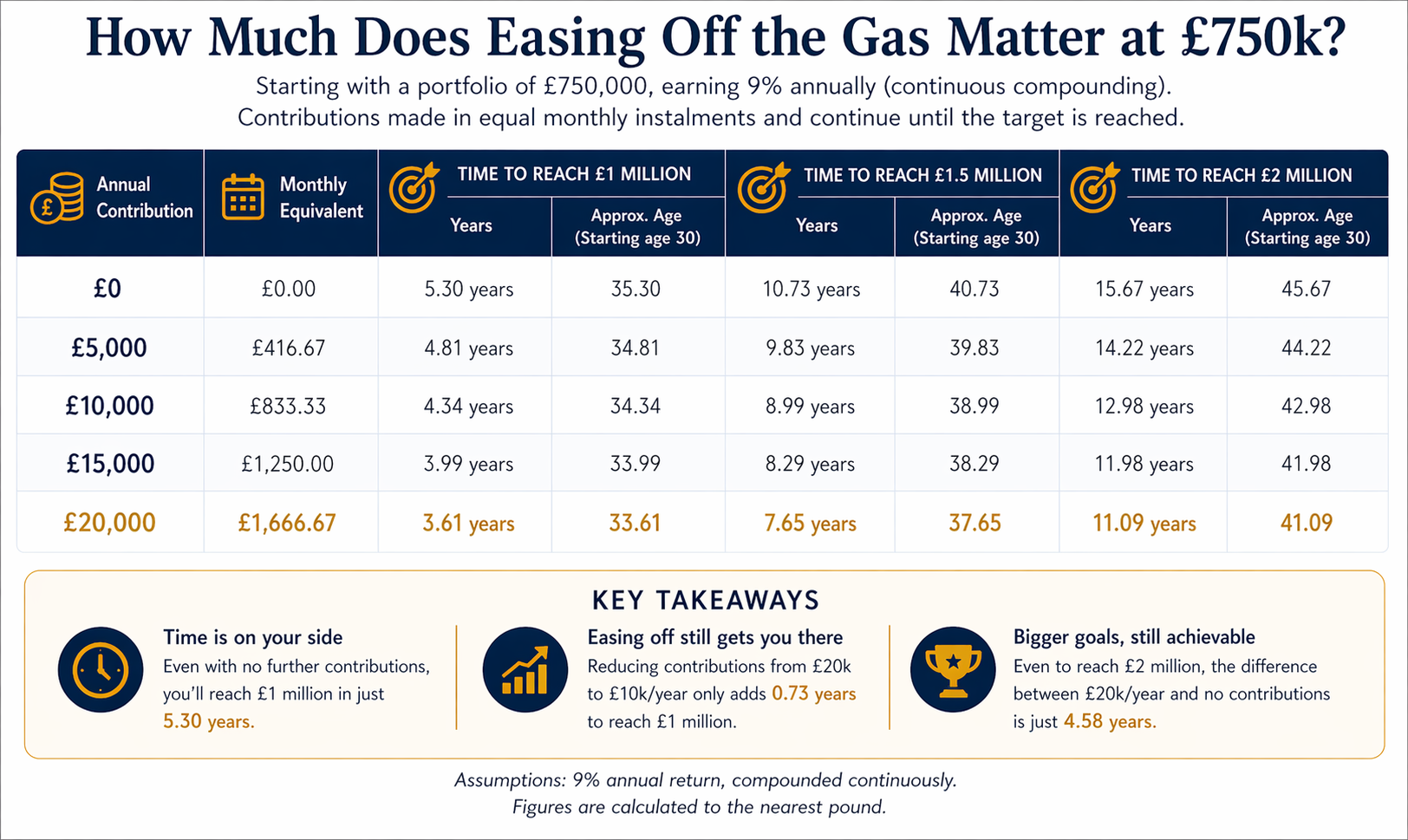
Why additional contributions into a large portfolio don’t matter
In the early years of your investment journey, progress feels slow. Every pound saved is hard-earned, and the gap between where you are and where you want to be feels enormous. But as the portfolio grows, there’s a moment in the journey when things begin to feel different. Compounding begins to take hold, giving your…
-
How long does it take to reach £200k invested?
If £200k is the point where investing starts to feel different, the natural question is: How long does it actually take to get there? In the early years, this can feel like the hardest part of the journey. Your investment growth is driven more by your savings rate and consistency than compound interest. Progress can…
-
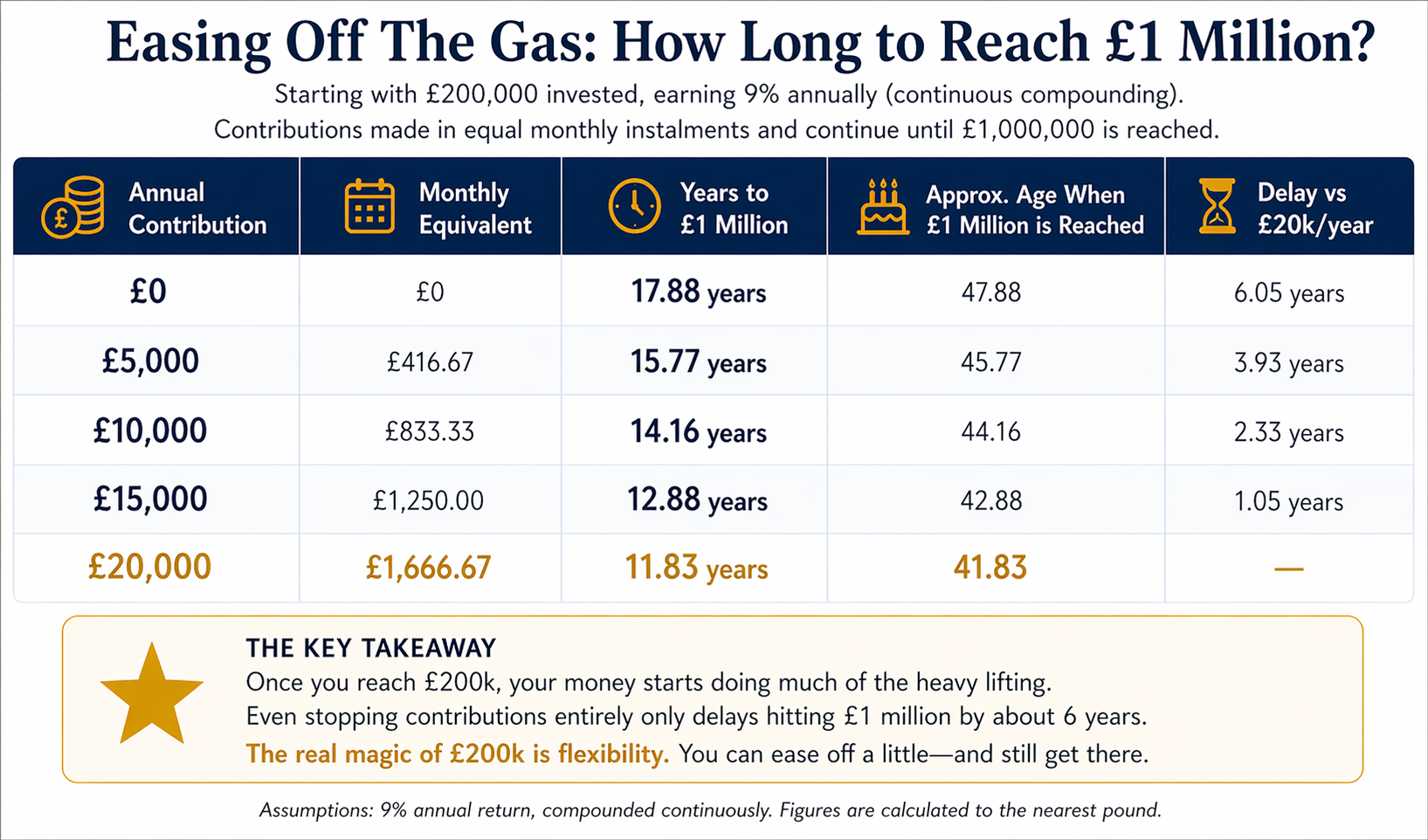
Why £200k is investing’s magic number
In the early stages of investing, progress feels painfully slow. You’re putting money aside each month, investing consistently into the market and doing all the right things – but the results don’t always feel meaningful. £5,000 becomes £10,000. £10,000 becomes £25,000. Yes, it’s progress, but it doesn’t quite feel life-changing. Building an investment portfolio that…
-

Vanguard’s Four Key Principles for Successful Investing
I’ve referred to these in a few past blog posts, but I thought I’d give Vanguard’s four key principles for successful investing their own post, since they have had such a profound impact on my own investing psychology. These principles are intended for building long-term wealth. They are not a get-rich quick scheme (and any…
-

How to Make the Most of Your Workplace Pension
One thing that really drives me crazy is when people leave money on the table at work. No, not literally. I haven’t seen physical money at work in years. I’m talking about contributions you could be getting from your employer and the government, simply by participating in your workplace pension. Shockingly, around 20% of employees…
-

The 4% Rule – how to know when to retire
How do you actually know when you can retire? Is it when you hit £500k… £1million… or some other arbitrary number that just “feels” right? The truth is, most people have no clear answer – which is why so many either delay retirement unnecessarily or worry they’ll run out of money. Fortunately, there is a…